


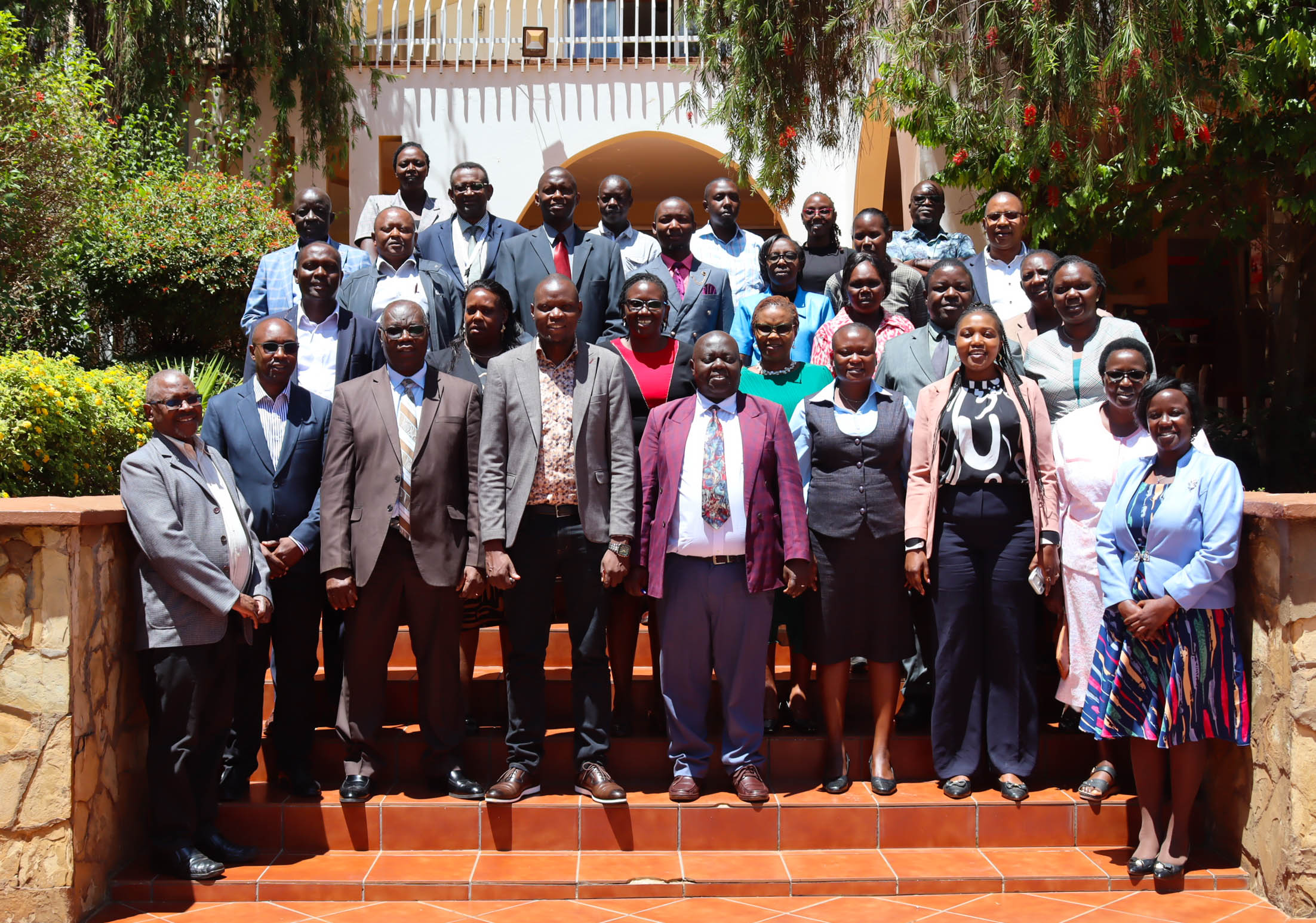
The University of Eldoret, in partnership with TAGDev 2.0, has taken a significant step toward strengthening institutional safeguards on gender equality and protection from violence following a validation workshop on its revised Gender Policy and Gender-Based Violence (GBV) Policy.
The one-day workshop, held on February 12, 2026 at Sirikwa Hotel Eldoret, brought together the University Management, the Directorate of Gender, Equity and Diversity, gender experts, staff and student representatives, county government officials, and members of the Gender Policy Review Committee. The forum provided a platform to examine the relevance, inclusivity, and legal conformity of the proposed policies within the framework of higher education.
The TAGDev 2.0 Coordinator, Prof. Julius Ochuodho, underscored the necessity for policies to serve as catalysts for institutional transformation rather than mere instruments of compliance. Participants were encouraged to focus on effective execution, proactive prevention, and sustainable cultural change within the university community.
Discussions in the room highlighted the importance of strengthening gender mainstreaming across academic and administrative domains, boosting enrolment in the Master’s Programme in Gender and Agriculture and exploring supportive resources for student-parents as fundamental aspects of more comprehensive inclusive strategies.
Strengthening the GBV Policy Framework
The Director of Gender, Prof. Judith Makwali, presented the revised GBV Policy, prompting extensive stakeholder engagement. Key recommendations included expanding the policy’s scope to comprehensively address the needs of students, staff, and contractors; strengthening survivor-centric reporting and disciplinary frameworks and formally establishing an Investigation Committee within the policy framework.
Participants further emphasized the need for clearer definitions pertinent to gender-based violence (GBV) concepts including consent, zero tolerance, workplace violence and sexual and gender-based violence. The explicit incorporation and safeguarding of persons living with disabilities, alongside the acknowledgement of same-sex GBV, were identified as critical areas warranting enhancement.
Legal conformity was hightlighted as a critical priority, with stakeholders urging for a clear citation of relevant national legislation, including those pertaining to data protection, occupational safety and health, cybercrime, and healthcare. Additionally, clarification was also sought on the University’s mandate in management of criminal cases, specifically regarding the referral to state agencies.
Addressing Technology-Facilitated Gender-Based Violence
A significant highlight of the workshop was the discourse surrounding Technology-Facilitated Gender-Based Violence (TFGBV). Initially introduced as an emergent concern within the Gender Policy framework, participants advocated for its comprehensive incorporation into the GBV Policy to ensure coherence and foster effective institutional response.
TFGBV comprising online harassment, cyberstalking, the unauthorized distribution of intimate visuals, impersonation and technology-enabled coercion was recognized as a growing concern within digitally integrated educational environments. The stakeholders emphasized the need for clear digital reporting channels, careful management of digital evidence, and alignment with cyber and data protection laws.
The conversation was shaped by insights established during the TAGDev 2.0’s Digital Safety Awareness Walk which took place in November 2025, revealing the escalating threat of online abuse and the limited understanding of reporting options. The participants collectively concurred on the urgent need transition from fundamental awareness creation to development of structured and sustainable safeguarding measures.
Advancing an Inclusive Gender Policy
Validation of the revised Gender Policy centered on bolstering preventive strategies, enhancing inclusivity, and harmonizing the policy with the University’s broader institutional transformation agenda. Participants highlighted the imperative of incorporating both the Gender and GBV policies into student orientation programmes and promoting continuous staff capacity-building initiatives to ensure sustained impact.
Cross-cutting recommendations from the workshop included adopting a proactive, prevention-oriented strategy concerning gender and GBV issues, the establishment of a dedicated survivor support office with trained professionals, the enhancement of confidential and efficient reporting mechanisms, and the fortification of continuous training on gender and digital safety.
The validation workshop marked a key milestone in reinforcing the University of Eldoret’s commitment to gender equality, safety, and dignity. Feedback from the multi-stakeholder engagement will inform the ultimate amendments of the policies, empowering the University to effectively tackle both physical and digital expressions of gender-based violence while promoting a more inclusive and secure educational and working environment.