
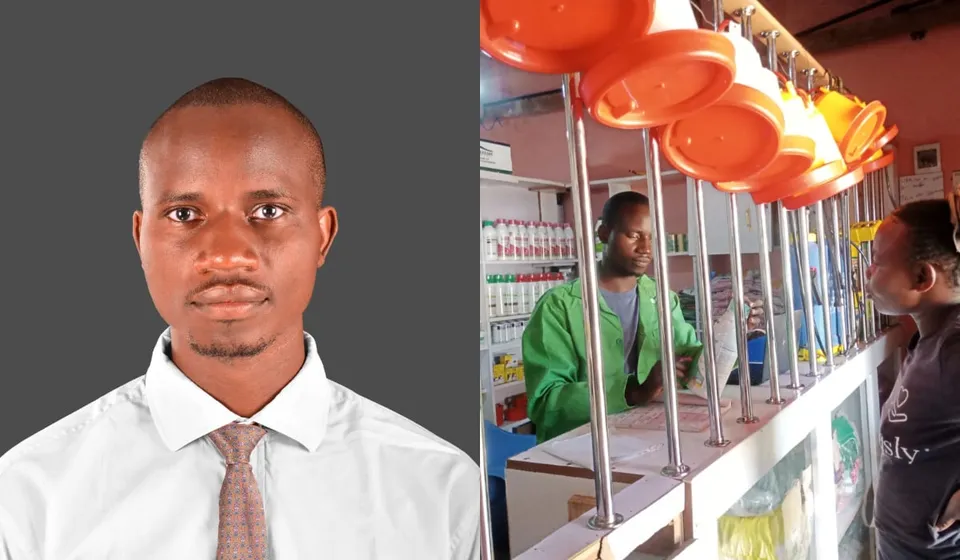
With resilience, agricultural knowledge and an entrepreneurial spirit, Benjamin Oketch Okombo is building a future in agribusiness while inspiring other young people to see agriculture as a pathway to opportunity.
For Benjamin Oketch Okombo, agriculture is more than a profession. It is a source of livelihood, a business opportunity and a powerful tool for transforming lives.
Born on 4 October 2000 in Kakseru Village, Ndhiwa, Homa Bay County, Benjamin’s journey has been shaped by loss, resilience and the determination to create a better future. Having lost his mother at the age of two, he was raised by his maternal aunt, Peres Oyuga, who cared for him from pre-primary school through Class Six.
In 2010, Benjamin moved to Golf Course Road Orphanage, where he received support that enabled him to continue his education. What began as a feeding programme eventually became a home. He remained at the orphanage until completing his secondary education in 2016.
Leaving the orphanage marked the beginning of a new chapter, one that required him to navigate life with limited resources but an unwavering determination to succeed.
After completing secondary school, Benjamin travelled to Nairobi, where his brother, Wickliffe, connected him to Ochieng Okayo, the Chief Executive Officer of Skylab Crop Care Agrovet.
Under Ochieng’s mentorship, Benjamin gained practical experience in agribusiness, learning about agricultural products, sales, customer relations and business management. The experience introduced him to the commercial side of agriculture and helped shape his entrepreneurial ambitions.
Although he had hoped to join university in 2017, financial challenges forced him to defer his studies for a year.
In 2018, he enrolled for a degree in General Agriculture, specialising in Crop Science at the University of Eldoret in Uasin Gishu County. With limited financial support, he relied on a Higher Education Loans Board (HELB) loan, work-study programmes and a bursary to finance his education.
His determination paid off.
On 24 November 2022, Benjamin graduated with First Class Honours in General Agriculture, Crop Science option, from the University of Eldoret.
His academic achievement was not merely a personal milestone, it was the foundation upon which he would build his dream of becoming an agricultural entrepreneur.
After graduation, Benjamin joined Rodi Agrovet in 2023 in Homabay, where he continued to deepen his knowledge of agricultural inputs, customer needs and agrovet operations.
By 2025, he felt ready to take the next step, building a business of his own.
With just KES 20,000 in working capital and KES 150,000 worth of stock obtained on credit from a distributor in Nyarkadera, Benjamin established Magina Farmers Center in Magina, Kabuoch, Homa Bay County.
Starting a business with limited capital was not easy. However, his technical knowledge, practical experience and commitment to serving farmers helped him establish a foothold in the agricultural inputs market.
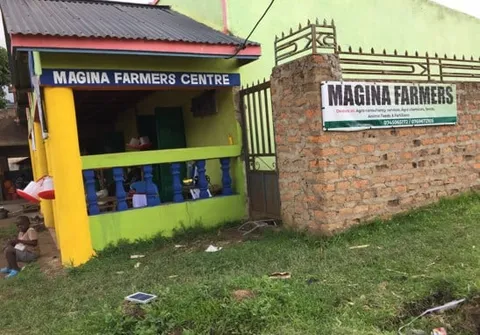
Today, Magina Farmers Center has grown to distributor level, supplying agricultural inputs to two agrovet outlets: Nyandiwa Agrovet and Sikwadhi Agrovet.
For Benjamin, the growth of the business represents more than commercial success. It demonstrates how agricultural knowledge, when combined with entrepreneurship, can create opportunities beyond formal employment.
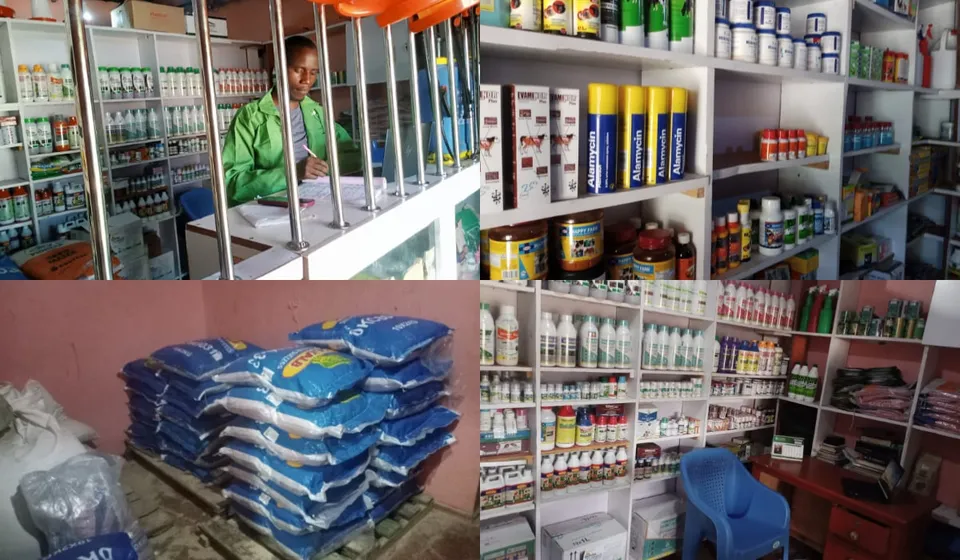
From the Agrovet to the Farm
Benjamin’s entrepreneurial ambitions extend beyond the sale of agricultural inputs. He is also investing directly in crop production.
This came after he participated in the TAGDev 2.0 Aimhub's 3 days Enterprise Acceleration Sprint Bootcamp at the university in July 2026. Through after which opted to go into crop farming using what he learnt at the bootcamp.
Read also : TAGDev 2.0 University of Eldoret Empowers Young Agripreneurs Through Enterprise Acceleration Sprint Bootcamp
In Nyakweri, Migori County, he cultivates tomatoes and hybrid collards on two acres under irrigation. On his family land in Kakseru, Ndhiwa, he grows melons and maize.
By combining agrovet distribution with crop production, Benjamin is building a business model that connects agricultural inputs, practical farming and market opportunities.
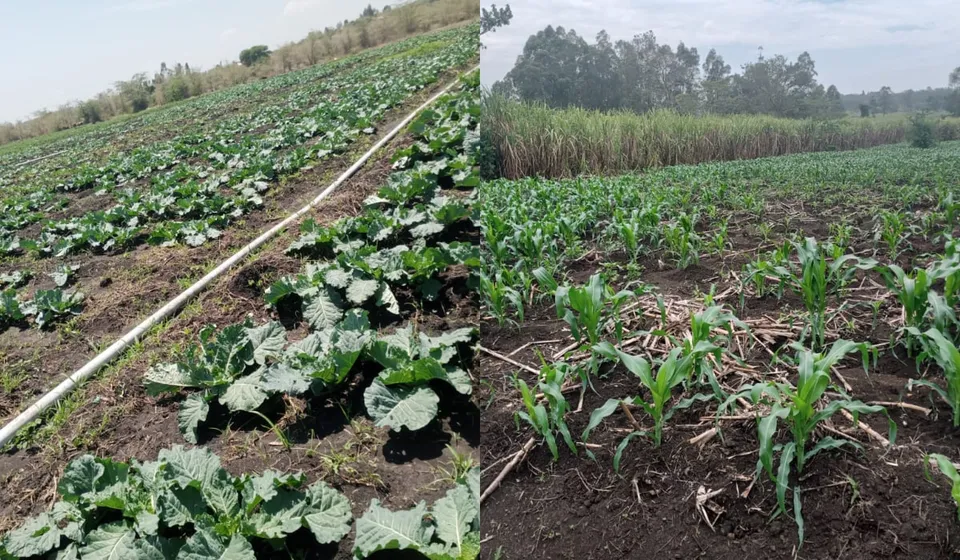
His experience gives him a deeper understanding of the challenges farmers face, enabling him to engage with them not only as a supplier but also as a fellow farmer.
This practical approach reflects the importance of experiential learning in agriculture, where knowledge is strengthened through application, experimentation and direct engagement with farming communities.
Inspiring Other Young People to Take Up Agriculture
Benjamin’s journey is already influencing other young people.
He points to individuals such as Kevin Okinyi, who has established businesses in Marrum, and David Nyolo, who now owns farms, as examples of people who have drawn inspiration from seeing what is possible.
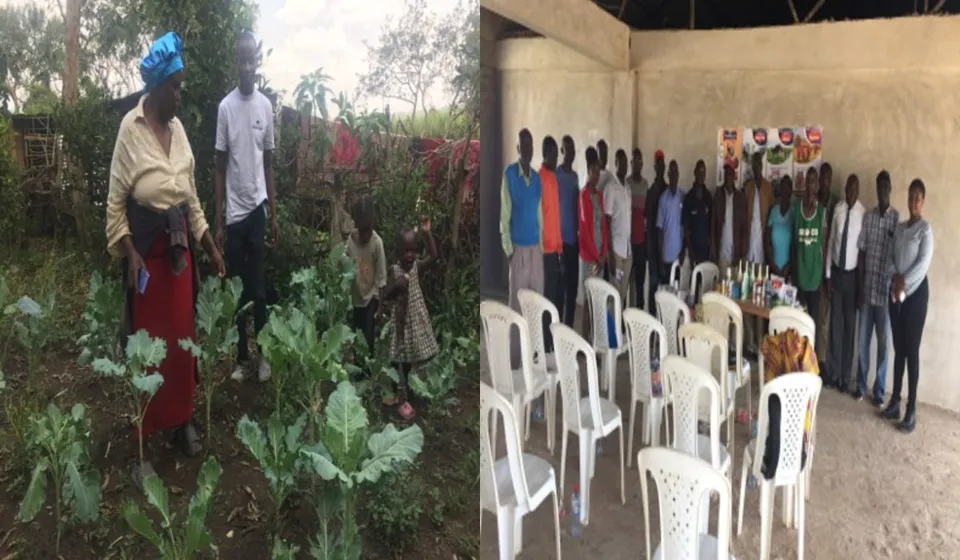
For Benjamin, these emerging success stories reinforce his belief that agriculture can offer young people meaningful opportunities, particularly those who struggle to secure formal employment after completing their education.
His own experience has shown him that a degree does not always guarantee a job. Rather than allowing this challenge to define his future, he has chosen to create opportunities for himself and others.
“I want to empower youths who finish school and lose hope for lack of jobs. I want to show them that agriculture can be a way forward, and that where you start does not decide where you finish,” he says.
His vision is to help young people recognise agriculture as a viable enterprise, encouraging them to apply their skills, explore agribusiness opportunities and become creators of employment.
The TAGDev 2.0 Investing in Potential
Benjamin’s story reflects the broader aspirations of the Transforming African Agricultural Universities to Meaningfully Contribute to Africa’s Growth and Development (TAGDev 2.0) programme.
Implemented by the Regional Universities Forum for Capacity Building in Agriculture (RUFORUM), TAGDev 2.0 seeks to transform agricultural universities into engines of inclusive growth and development by equipping young people with relevant knowledge, skills and opportunities.
At the University of Eldoret, the programme places emphasis on youth employability, entrepreneurship, experiential learning and the development of agricultural skills that respond to the needs of communities and the wider economy.
Benjamin’s journey from a young man navigating financial hardship to a Crop Scientist, agribusiness owner and emerging farmer illustrates the potential of agricultural education to create pathways beyond conventional employment.
Through Magina Farmers Center and his farming ventures, he is demonstrating how agricultural knowledge can be translated into enterprise, while his mentorship of other young people points to the wider social impact of his work.
His story is a reminder that the impact of agricultural education is not measured only by academic qualifications, but also by the businesses established, livelihoods supported and opportunities created.
For Benjamin, the journey is still unfolding. His ambition is to continue growing his enterprises while inspiring more young people to embrace agriculture as a profession and a business.
From the challenges of his early childhood to the establishment of a growing agribusiness, his story carries a powerful message: where you begin does not determine where you end, and agriculture can be a pathway to both personal transformation and community development.