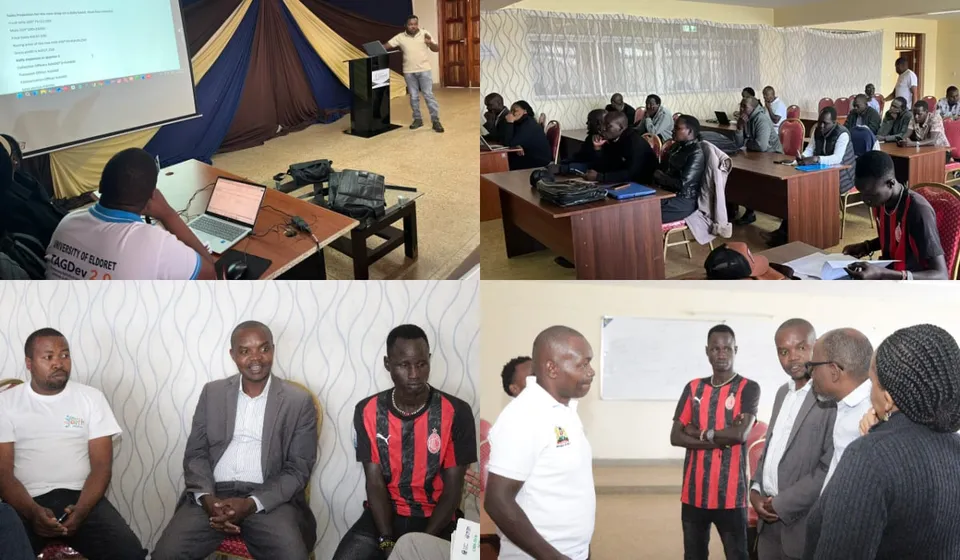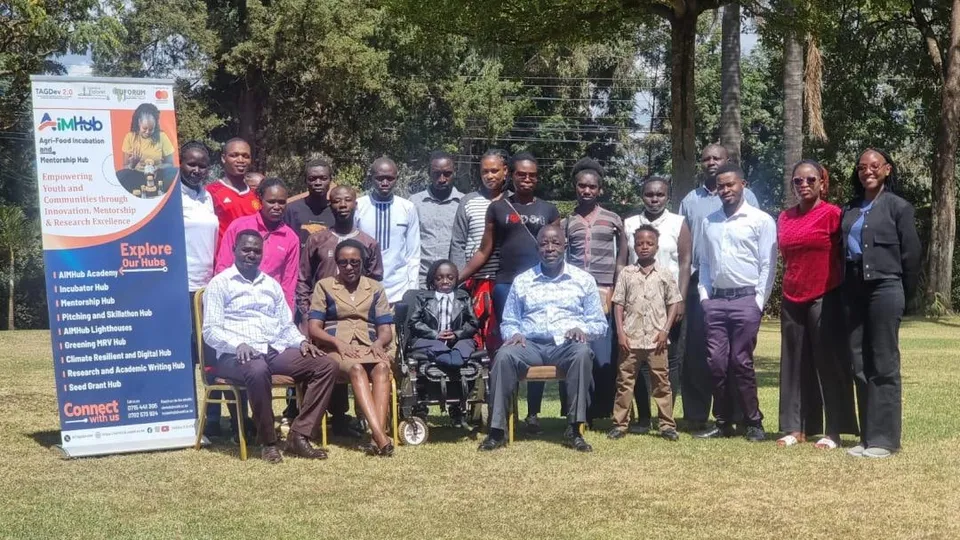

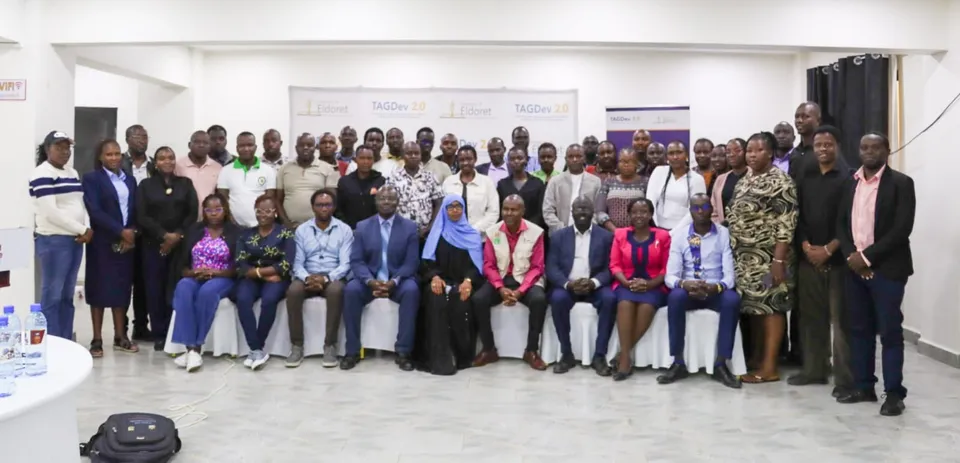
The University of Eldoret, through the Transforming African Agricultural Universities to Meaningfully Contribute to Africa’s Growth and Development (TAGDev 2.0) Programme, conducted a two-day capacity-building workshop for forty (40) Ward Agricultural Officers (WAOs) drawn from Uasin Gishu, Nandi, Elgeyo Marakwet and Baringo Counties. The training, held on 18th–19th November 2026 at Grand Empire Hotel, Eldoret, aimed at strengthening the capacity of frontline agricultural extension personnel to support sustainable agricultural development and improve service delivery at the community level. It further seeks to strengthen the link between agricultural research, innovation and practice. The initiative recognises that sustainable agricultural transformation depends not only on developing new technologies and best practices but also on ensuring that these reach farmers and are effectively applied at the community level.
The training focused on equipping the officers with practical knowledge and skills in key areas of agricultural development, including Climate-Smart Agriculture (CSA), and best practices in coffee, avocado and macadamia production and value-chain development. For better grounding the participants were also introduced to Gender Action Learning Systems (GALS) as the vehicle through which to deliver the transformative training to the community. Through these sessions, participants explored approaches to promoting sustainable farming practices, strengthening farmer engagement and supporting the adoption of agricultural technologies and innovations.
A key focus of the engagement was the role of Ward Agricultural Officers in strengthening last-mile delivery of agricultural knowledge and innovations. As frontline extension personnel, the officers play an important role in connecting farmers to relevant information, technologies and practical solutions that can improve agricultural productivity. Further, the WAOs. due to their close proximity to the farmers, are best placed to pick out the indigenous knowledge and practices which have been proven to yield desired results for the farmers. As such, they act as the link between traditional and modern scientific practices. The training therefore emphasised their contribution to farmer mobilisation, extension support, technology dissemination, documentation of field activities and linkages with relevant agricultural development initiatives.
The capacity-building initiative aligns with TAGDev 2.0 strategic objective of strengthening extension services and leveraging technology to engage young women and men in the delivery of climate-smart production and productivity-enhancing practices, technologies and innovations. It also contributes to the programme’s commitment to supporting the training of trainers (ToTs) for extension agents, enabling them to update their technical knowledge and strengthen their knowledge-transfer skills to accelerate the dissemination of agricultural innovations, technologies and best practices to farmers.
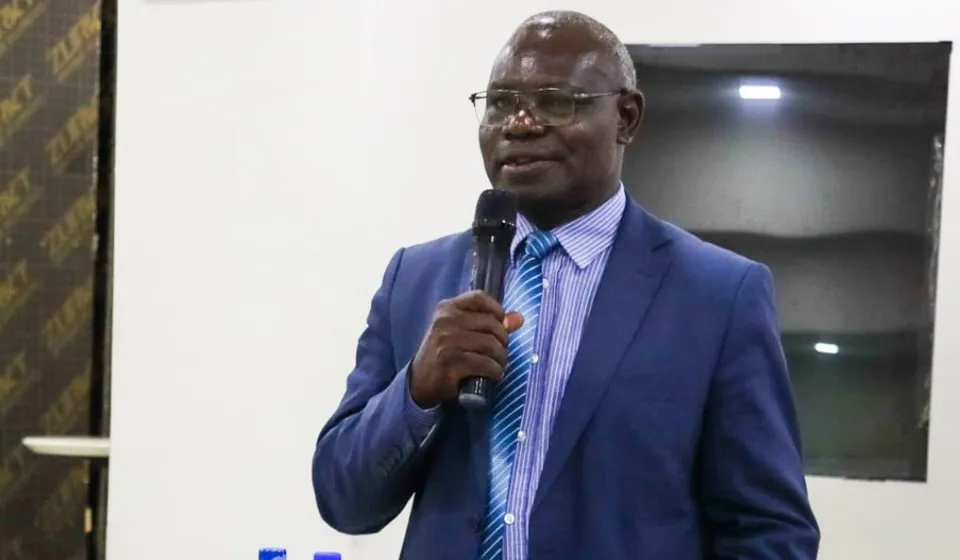
Addressing the participants, UoE TAGDev 2.0 Coordinator, Prof. Julius Ochuodho, emphasized that beyond technical knowledge, the training provided an opportunity to strengthen coordination between the University of Eldoret’s TAGDev 2.0 Programme and county-level agricultural extension teams. Participants discussed practical actions, implementation timelines, reporting channels and coordination mechanisms to support effective follow-up and delivery of planned interventions within their respective communities, in close collaboration with the UoE TAGDev 2.0 secretariat.
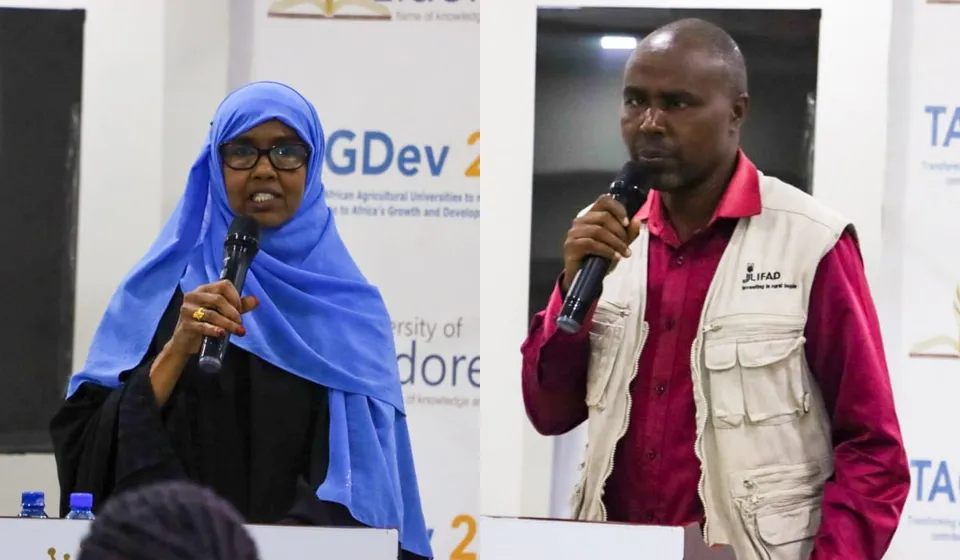
In attendance was the Uasin Gishu County Director of Agriculture (CDA), Mr. Reuben Seroney who echoed the county’s push for continued partnerships that equip farmers with newer knowledge and technologies. Dr. Fatuma Daudi who was the Ag. Deputy Vice-Chancellor, Planning, Research & Extension, praised the ongoing collaborations between the University of Eldoret and the four county governments, noting that such collaborations are the only way to address current challenges facing farmers in the region.